


Bespoke And Custom Suit: What Is The Difference?
A bespoke suit is cut from a pattern drafted from scratch for one person and refined over several fittings, usually with a high share of handwork. The term "custom suit" is broader. Most makers use it to mean made-to-measure, where an existing pattern is adjusted to your measurements. Some apply it to style-only personalization, and others treat it as a synonym for bespoke. We will learn the difference between a bespoke suit and a custom suit in this guide.
What is a bespoke suit?
A bespoke suit is made from a unique pattern created for one client. It is developed through a series of fittings, during which the garment is taken apart and recut as the tailor learns how the body and the cloth behave together. The word comes from the old sense of “bespeaking” cloth: the fabric was spoken for by a particular customer before it was ever cut.
The process starts with measurement. Alongside a full set of measurements, the cutter notes how the client stands: whether one shoulder sits lower than the other, whether the posture leans forward, how the seat and thighs carry weight. Those observations are drafted directly into a paper pattern that belongs to that customer alone. Most bespoke houses keep the pattern on file, so a second suit starts from a proven base rather than from zero.
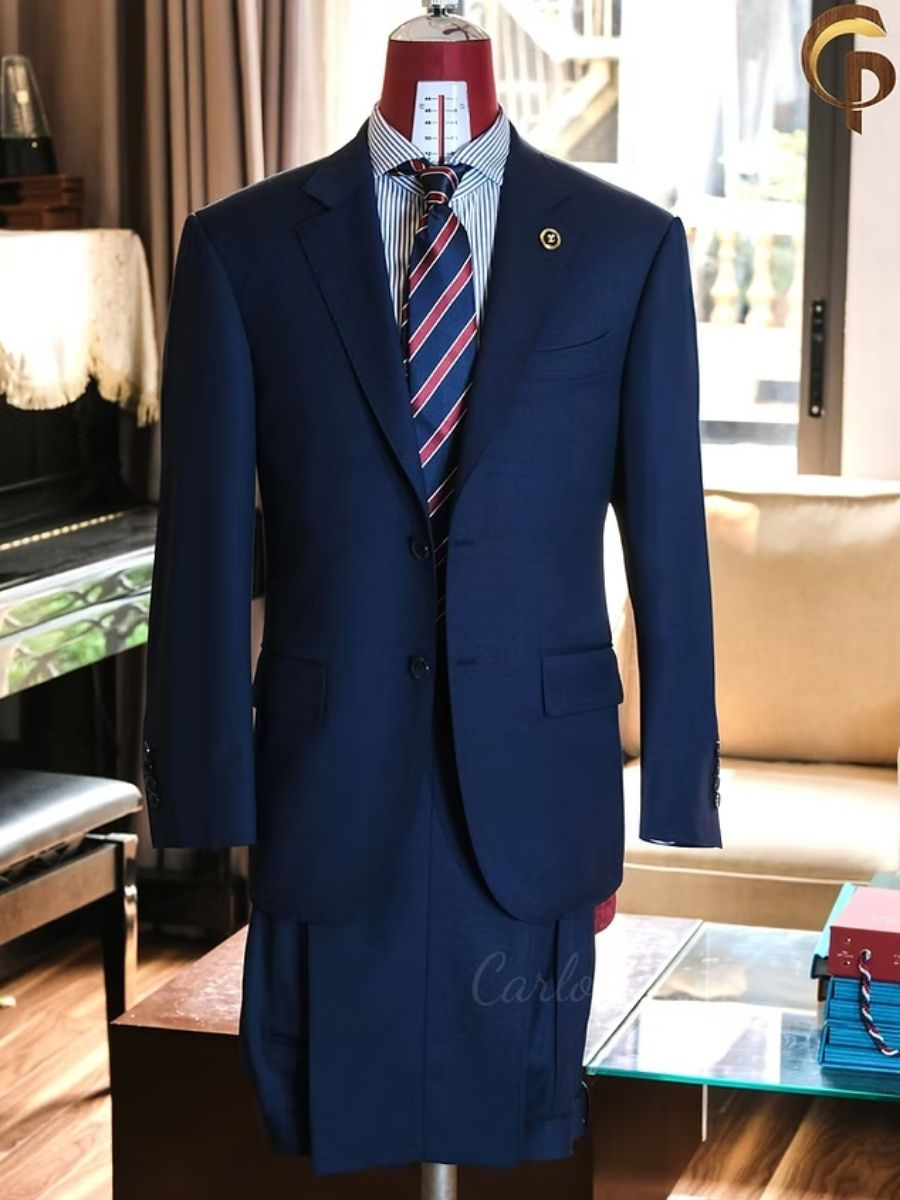
Fittings are where bespoke tailoring earns its reputation. The first is usually a skeleton baste: a loosely tacked shell with the sleeves only partly set and no pockets cut. It lets the tailor check balance, shoulder line, and length while changes are still cheap to make. After the baste, the cutter may recut parts of the pattern before a forward fitting. A final fitting checks sleeve pitch, trouser break, and how the coat sits in movement.
What traditional bespoke construction involves?
Traditional bespoke jackets are usually fully canvassed. A floating layer of wool or horsehair canvas sits between the cloth and the lining, shaping the chest and molding to the wearer over time. Lapels are often pad-stitched by hand so they roll rather than lie flat, and sleeves are commonly set by hand for a cleaner, more mobile shoulder.

These are long-standing practices in houses that follow the Savile Row tradition, but no international rule requires them, and some respected bespoke tailors machine-sew certain internal seams. A question about how the jacket is constructed tells a buyer more than the word on the label.
What does “custom suit” actually mean?
There is no single industry definition of a custom suit. Across North America, Europe, and Australia, the term covers at least three different services, and knowing which one a shop means is the first thing to settle before comparing prices.
Made-to-measure is the most common meaning. The maker starts from an existing block pattern, a base template drafted in a range of sizes. That block is then altered using the customer’s measurements and fit preferences: sleeve length, waist suppression, shoulder width, trouser rise, and similar points. Production is usually handled by a factory or workroom rather than by the person who took the measurements.
Made-to-measure fits most builds very well. Its limit is the block itself. When a body differs sharply from the proportions the block was drafted around, adjustments can only go so far before balance problems appear at the collar or across the back.

Some retailers use "custom" to describe style personalization on a standard size. The buyer chooses a lapel shape, lining, buttons, monogram, or pocket style, while the fit comes from a stock pattern. A suit like this can look individual yet fit no differently from off-the-rack clothing, with alterations after delivery doing most of the fitting work.
In the United States especially, custom has long served as a plain-English equivalent of bespoke, and some American tailors describe fully hand-drafted work as custom tailoring.
Which offers a better fit?
Bespoke has the higher ceiling for fit, but a skilled made-to-measure maker will outfit most people better than an average bespoke tailor. Fit depends on how well the maker reads the body, not only on the process behind the pattern.
Shoulder slope changes how the collar sits. A dropped shoulder left uncorrected produces diagonal folds across the back.
Posture changes the jacket’s balance. A forward-leaning stance calls for a shorter front and a longer back, while an upright, military posture needs the reverse.
Other common variations include chest shape, a prominent shoulder blade, or one arm longer than the other.
In bespoke, these are drafted into the pattern from the start. Made-to-measure handles them through block adjustments, which works well for moderate variations and less well for pronounced ones.
Trouser fit gets less attention than the jacket but often decides whether a suit feels comfortable. The rise determines where the waistband sits. The seatroom governs how the trousers behave when you sit down. The break and leg width set the line over the shoe.
Bespoke trousers can be cut around a specific stance and seat shape. Most made-to-measure systems adjust the rise, seat, and thigh within set increments. That suits the majority of customers but may not resolve a very full seat or noticeably uneven hips.
The person taking measurements has more influence on the result than the category of suit. An experienced fitter in a made-to-measure program can spot a dropped shoulder and order the right correction. An inexperienced bespoke cutter can miss the same thing across three fittings. When comparing makers, buyers learn more from photos of finished suits on real clients, particularly from the back and side, than from any description of the process.
See more: All Custom Tailored Garment
Which suit is better for weddings and special occasions?
For a groom with enough time and budget, bespoke offers the most personal result. For wedding parties and tight schedules, made-to-measure is usually the more practical choice.
The groom’s suit and the calendar
Lead time is the main constraint. Bespoke needs room for several fittings, and a groom whose weight changes in the months before the wedding may need an extra adjustment late in the process. Starting several months ahead keeps the final fitting from colliding with wedding week. Made-to-measure can deliver a personal fit on a shorter schedule, which suits couples planning within a few months.
Groomsmen and matching sets
Made-to-measure tends to win when several people need matching suits. Each groomsman can be measured separately, even in different cities, and all suits can be cut from the same fabric lot. That avoids the slight shade differences that occur between dye batches. Details such as lapel width, button style, and trouser finish also stay consistent when one maker produces the whole set. Bespoke for an entire wedding party is possible but rarely practical, since every member would need multiple fittings with the same tailor.

Black tie and formal pieces you’ll wear again
A tuxedo or formal suit worn to several events over many years justifies more investment than a one-time outfit, which makes it a reasonable place for bespoke if the budget allows. For a business suit that doubles as wedding attire, made-to-measure in a versatile navy or charcoal often delivers better long-term value than an occasion-specific color.
Which option is better for your needs?
Most buyers are well served by made-to-measure. Bespoke makes the most sense for difficult fits and for clients who want full control over every detail of the garment.
First-time suit buyers
A first tailored suit is a chance to learn what your fit and style preferences actually feel like in daily wear. Made-to-measure keeps the cost and commitment lower while still delivering a fit far closer than off-the-rack. Feedback from that first suit then informs every later order, including a move to bespoke if you want one.
Professionals building a business wardrobe
Professionals who wear suits several days a week benefit most from consistency. Once a made-to-measure profile is dialed in, additional suits in different clothes can be ordered with little risk. Bespoke is worth considering for one or two anchor pieces, such as a navy or charcoal suit worn constantly, where the extra refinement pays off through frequent wear.
Grooms and wedding parties
The wedding section above covers this in detail. In short, the groom chooses based on timeline and budget, while the wedding party is usually best served by coordinated made-to-measure.
If your brand, retail business, or wedding company is planning a suit range or a made-to-measure program, Carlo Pham’s team is happy to [[discuss your suit specifications]], along with fabric options, sampling, customization, and production requirements. A short brief with your designs, target quantities, and timeline makes it easier to give clear answers on what each stage involves.
_____________________
Carlo Pham - Modern Voice of Tailoring
Hotline: 02462838855
Địa chỉ: Số 9 Hàng Mành, Hoàn Kiếm, Hà Nội
Instagram: Carlopham


Comments