


American Sack Suit: History, Fit, Fabrics and Styling
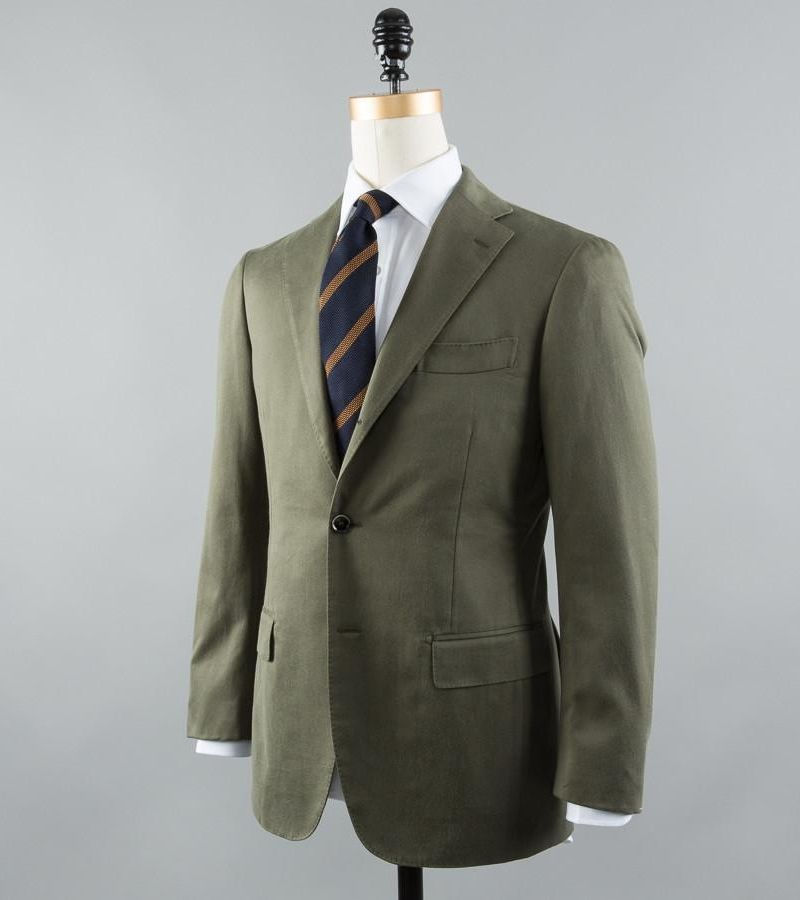
An American sack suit is a single-breasted suit with a natural, lightly padded shoulder, an undarted or barely shaped front, a straight body and a single center vent, most famously finished with a three-roll-two button front. Brooks Brothers made it the standard American business suit around the turn of the twentieth century, and through the 1950s and early 1960s it was the everyday uniform of Ivy League campuses, Madison Avenue and Wall Street.
This guide covers where the American sack suit came from, the construction details that define it, how it compares with British and Italian suits, the fabrics that suit it best and how to wear it now.
What is an American sack suit?
The word "sack" describes the cut, not the quality. In the nineteenth century, a sack coat was a loose lounge jacket made without the separate waist seam found on frock coats and morning coats, so it hung from the shoulders in a fairly straight line instead of hugging the torso.
American makers refined that idea into a complete suit with a softer shoulder and a cleaner front, and the result became the default business suit in the United States for roughly half a century.

In practical terms, a sack jacket is drafted with few or no front darts and only modest shaping through the side seams. The chest and waist measurements of the finished coat sit relatively close together, which is why the jacket looks columnar rather than hourglass-shaped. Paired trousers are traditionally plain-front, straight in the leg and often finished with cuffs.
Several other names point to the same garment or a close relative. Collectors and enthusiasts often say "natural shoulder suit," "Ivy League suit" or "trad suit," while older retail catalogs used house names such as the Brooks Brothers No. 1 Sack.
Strictly speaking, not every natural shoulder suit is a true sack, since some later versions added a front dart, but the overall silhouette and the American origin are what tie the family together.
Origins of the American sack suit
The sack suit is tied most closely to Brooks Brothers, the New York clothier founded in 1818 and an early leader in ready-made clothing. Around the turn of the twentieth century, the company standardized a soft-shouldered, undarted sack model that became known as the No. 1 Sack.
A jacket without darts and heavy shaping is simpler to grade across sizes, easier to alter and less dependent on a precise individual fitting. In an era when British tailoring prized close, sculpted fits produced one customer at a time, the American approach favored comfort, consistency and quiet understatement.
Campus clothiers carried the style into university life. J. Press opened in New Haven in 1902 to dress Yale students, and similar shops served Harvard and Princeton, selling natural shoulder suits and sport coats alongside oxford cloth button-down shirts, repp ties and penny loafers. By the 1950s, the combination had a name, Ivy League style, and it spread well beyond the Ivy schools themselves.

Postwar America gave the look its widest reach. College enrollment expanded rapidly after World War II, and graduates took the campus wardrobe into banks, law firms and advertising agencies. For roughly two decades, a gray flannel or navy worsted sack suit was simply what an American professional wore to work.
Tastes shifted in the late 1960s and 1970s toward wider lapels, shaped waists and bolder fashion, and the 1980s favored the heavily padded power suit. The sack suit never disappeared, since traditional American clothiers kept making it, but it became a niche choice associated with older customers and East Coast institutions.
Interest returned in the 2000s and 2010s, helped by renewed attention to heritage menswear, Japanese brands that studied Ivy style closely and the 2010 English-language edition of the 1965 Japanese photo book Take Ivy. Today the sack suit sits within a wider move toward soft, unstructured tailoring, which gives it a relevance that goes beyond nostalgia.
Defining characteristics of the American sack suit
A true sack suit is recognized by a group of details working together, not by any single feature. A natural shoulder on a darted, nipped jacket reads as soft Italian or modern slim tailoring; the American character comes from the full combination below.

Natural shoulder construction
The shoulder follows the wearer's own slope, with thin padding or none at all and no roped or built-up sleeve head. Sleeves are set in smoothly so the shoulder line flows into the arm. On a well-made example, the jacket looks almost unconstructed at the shoulder while still holding a clean line across the upper back, which depends on careful pattern work and pressing rather than on padding.
Straight, relaxed body silhouette
From the shoulders down, the jacket falls in a nearly straight line. Ease through the chest and waist allows layering over a sweater or a heavier shirt and gives the wearer freedom to move, reach and sit. Jacket length is traditionally generous, covering the seat fully, which balances the straight body visually.
Minimal waist suppression
Waist shaping is kept to a minimum, usually limited to slight contouring at the side seams. The jacket does not cinch at the button point the way a British or Neapolitan coat does. For customers used to fitted European suits, this is the feature that takes the most adjustment, and it is also the one that most clearly separates a sack suit from a merely soft-shouldered jacket.
Two-button, three-button and 3/2 roll fronts
The signature front is the three-roll-two, often written as 3/2 roll. Three buttonholes are cut, but the lapel is pressed so its roll passes over the top button, leaving that button half hidden in the turn of the lapel; only the middle button is fastened. Straight two-button and true three-button fronts are also traditional. A properly executed 3/2 roll needs a canvassed front, because fused interfacing tends to flatten the lapel and leave a hard crease at the top buttonhole.
Center back vent
A single center vent is standard, and classic American versions use a hook vent, in which the top of the overlap is cut in a hook shape rather than a straight seam. The hook keeps the vent lying flat and is one of the clearest signs of traditional sack construction. Double side vents and ventless backs belong to other tailoring traditions.
Traditional notch lapels
Lapels are single-breasted notch lapels of moderate width, typically around 2.75 to 3.25 inches (7 to 8.3 cm) depending on the era and maker. Gorge height is moderate, and the lapel roll is soft rather than pressed flat. Peak lapels are rare on sack suits and generally look out of place.
Minimal or no darts
The classic sack front has no darts at all, with shape coming from the side body seams and pressing. Some later and contemporary natural shoulder suits add a short front dart for a little extra definition while keeping the overall straight line. Both approaches are legitimate; the undarted version is the purist's choice, and the darted version tends to suit customers who want a slightly cleaner waist.
Finishing details
Traditional makers often add lapped seams down the back and side seams, swelled edges with a line of stitching set about a quarter inch (6 mm) in from the lapel and front edges, and flapped hip pockets without a ticket pocket. Sport coat versions frequently use three patch pockets. Trousers are plain-front with a straight leg, belt loops and, on many classic examples, cuffs of about 1.5 to 1.75 inches (3.8 to 4.5 cm).
American sack suit vs British and Italian suits
Feature | American sack suit | British suit | Italian suit (Neapolitan) |
Shoulder | Natural, thin or no padding | Structured, padded, often roped sleeve head | Soft, unpadded, often shirt-style sleeve head |
Waist | Minimal suppression | Strongly suppressed | Shaped, close fit |
Front darts | None or a short dart | Full front darts | Front darts |
Silhouette | Straight, relaxed | Hourglass, upright | Close, short, light |
Front closure | 3/2 roll, two-button or three-button | Two-button or one-button | Two-button or 3/2 roll |
Vents | Single center hook vent | Double side vents | Double side vents or none |
Lapels | Moderate notch, soft roll | Notch or peak, crisp roll | Notch or peak, often wider |
Jacket length | Long, covers seat | Medium to long | Short |
Pockets | Flapped hip pockets, patch on sport coats | Slanted hip pockets, ticket pocket | Patch or flapped, curved breast pocket |
Trousers | Plain front, straight leg, often cuffed | Pleated or plain, higher rise, side adjusters | Plain or pleated, tapered leg |
Typical cloth | Worsted, flannel, tweed, cotton | Mid to heavy worsteds, flannel, tweed | Lightweight wool, linen, cotton |
Overall impression | Understated, practical, academic | Formal, commanding | Relaxed elegance, fashionable |
How to style an American sack suit?
The sack suit looks best when the accessories share its understated, slightly relaxed character. Very slim ties, high-shine shoes and tight shirts fight the silhouette; classic American staples complete it.
For business
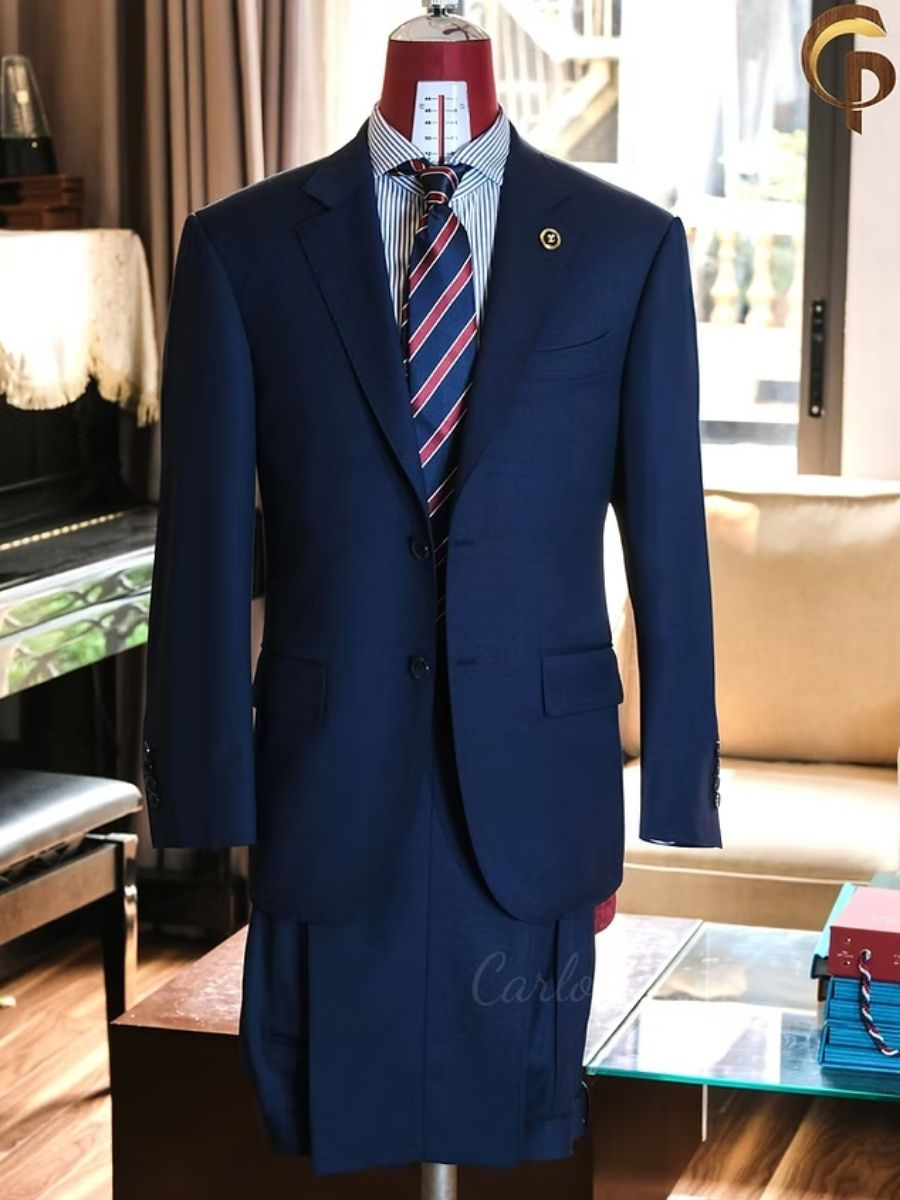
A navy or charcoal worsted is the most versatile business choice, with gray flannel as the cold-weather alternative. A white or light blue shirt in oxford cloth or broadcloth, with either a button-down or a moderate point collar, keeps the look traditional. Repp stripes, small foulards and solid grenadines are the natural tie choices, ideally in a width close to the lapel's. Dark brown or black leather shoes such as plain-toe bluchers, wingtips or polished penny loafers suit most American offices, though more conservative industries still favor laced oxfords.
For smart casual
The suit jacket, or a sack sport coat in tweed or hopsack, works well with gray flannel trousers or chinos. Knit ties, open collars and crewneck or cable-knit sweaters under the jacket all fit the Ivy vocabulary, since the generous cut leaves room for layering. Suede bucks, loafers or chukka boots finish the outfit. Seersucker and khaki cotton suits can also be split into separates for summer weekends.
For weddings
Guests at daytime or outdoor summer weddings can wear a tan cotton, light gray or seersucker sack suit, assuming the invitation does not specify a dress code. For evening ceremonies or a "cocktail" or "business formal" dress code, a dark navy or charcoal worsted is the safer option. A groom who wants an American look can commission a sack suit in a fine midweight worsted with a crisp white shirt and a silk tie, which photographs well and stays comfortable through a long day.
For formal occasions
A sack suit is a lounge suit, so it is not a substitute for black tie or white tie. Where an event calls for business formal or lounge suit attire, a dark worsted sack suit with a white shirt, a conservative silk tie and black oxfords is entirely correct. For black tie, the matching garment is a dinner jacket.
Caro Pham team's experience covers both traditional construction, including natural shoulders, canvassed fronts and 3/2 roll lapels, and contemporary fits for today's customers, which makes it a practical partner for brands that want an American sack suit to look authentic and sell in modern size ranges. Brands can bring a finished tech pack, a reference garment or only a concept, and the Carlo Pham team can help develop patterns, source suitable fabrics, produce samples and move the style into production.
>>> See more: Elevate your wardrobe with classic tailored suits and coats. Check out Carlo Pham’s Bespoke Products to find your perfect fit.
_____________________
Carlo Pham - Modern Voice of Tailoring
Hotline: 02462838855
Địa chỉ: Số 9 Hàng Mành, Hoàn Kiếm, Hà Nội
Instagram: Carlopham



Comments