


Summer Wedding Suit Tailored in Vietnam | Carlo Pham
A summer wedding suit uses lightweight, breathable cloth, typically linen, fresco, tropical wool, or a cotton-linen blend, cut with minimal lining and soft construction to stay comfortable in heat. Carlo Pham tailors made-to-measure summer wedding suits in Hanoi in 5 to 7 days, with overseas shipping available for clients who cannot stay in Vietnam for the full process.
What makes a suit a summer wedding suit?
Three factors separate a summer suit from a standard one: the weight and weave of the cloth, the amount of internal structure, and the cut. Each one affects how much heat the garment traps.
Fabric weight and breathability
Fabric weight is measured in grams per square meter (gsm). Standard business suiting runs 280 to 320 gsm. For summer weddings, the target range is 200 to 260 gsm. Below 200 gsm, cloth becomes fragile and loses shape quickly; above 260 gsm, it holds too much heat for outdoor wear.
Construction: half-canvas, quarter-lined, and unlined options
The inside of a jacket adds as much warmth as the outer cloth. A fully lined jacket carries a complete layer of viscose or cupro across the back and sleeves, plus a chest piece and shoulder padding. For summer wear, we reduce these layers in stages.
A quarter-lined jacket keeps lining only in the sleeves and upper back, so the jacket slides on easily while the lower back and sides stay open. An unlined jacket removes the body lining entirely, which requires clean internal finishing since the seams are visible.

For structure, a half-canvas build keeps a floating canvas layer through the chest and lapel only. The jacket holds its shape at the front where it matters, while the rest of the body stays light. Our standard summer wedding build is half canvas with quarter lining. For beach ceremonies, unlined is a reasonable step further.
Fit considerations for hot climates
A summer wedding suit should sit slightly easier on the body than a business suit. A very slim fit presses cloth against the skin, which blocks airflow and shows sweat faster. Carlo Pham cut summer wedding suits with a small amount of extra room through the chest, upper back and thigh. The silhouette stays sharp, but air can move between the cloth and your shirt.
A mid or high-rise with side adjusters removes the need for a belt, which cuts a layer of leather at the waist. A no-break or quarter-break hem keeps the trousers off your shoe and reads correctly in wedding photos.
Best fabrics for a summer wedding suit
Fabric is the single biggest decision for a summer wedding suit. The five options below cover the full range from casual beach ceremonies to formal daytime weddings. Each one behaves differently in heat, in photos and over a long day of wear.
Linen
Linen is the most breathable suiting fabric available. The fiber conducts heat away from the body and the typical plain weave leaves visible space between yarns for airflow. Irish and Belgian linens in the 240 to 280 gsm range hold a jacket shape better than lighter Italian linens, which drape softly but crease faster.

The trade-off is wrinkling. Linen creases from the first hour of wear, and no construction method prevents it. For a beach or garden wedding, this reads as natural and correct. For a formal indoor ceremony, pure linen can look too relaxed. A common middle path is a linen blend, covered below.
Fresco and high-twist wool
Fresco is a high-twist wool woven with an open, porous structure. The tightly twisted yarns spring back from creases, so the suit stays sharp through a full day, while the open weave moves air almost as well as linen. Hold a length of fresco up to a light and you can see through it.
For grooms who want a formal appearance without heat, this is the strongest option. The surface is matte and slightly grainy rather than smooth, which photographs well outdoors. The main caution is that budget frescoes can feel wiry against the skin, so a quarter lining in the sleeves is worth keeping.
Tropical-weight wool
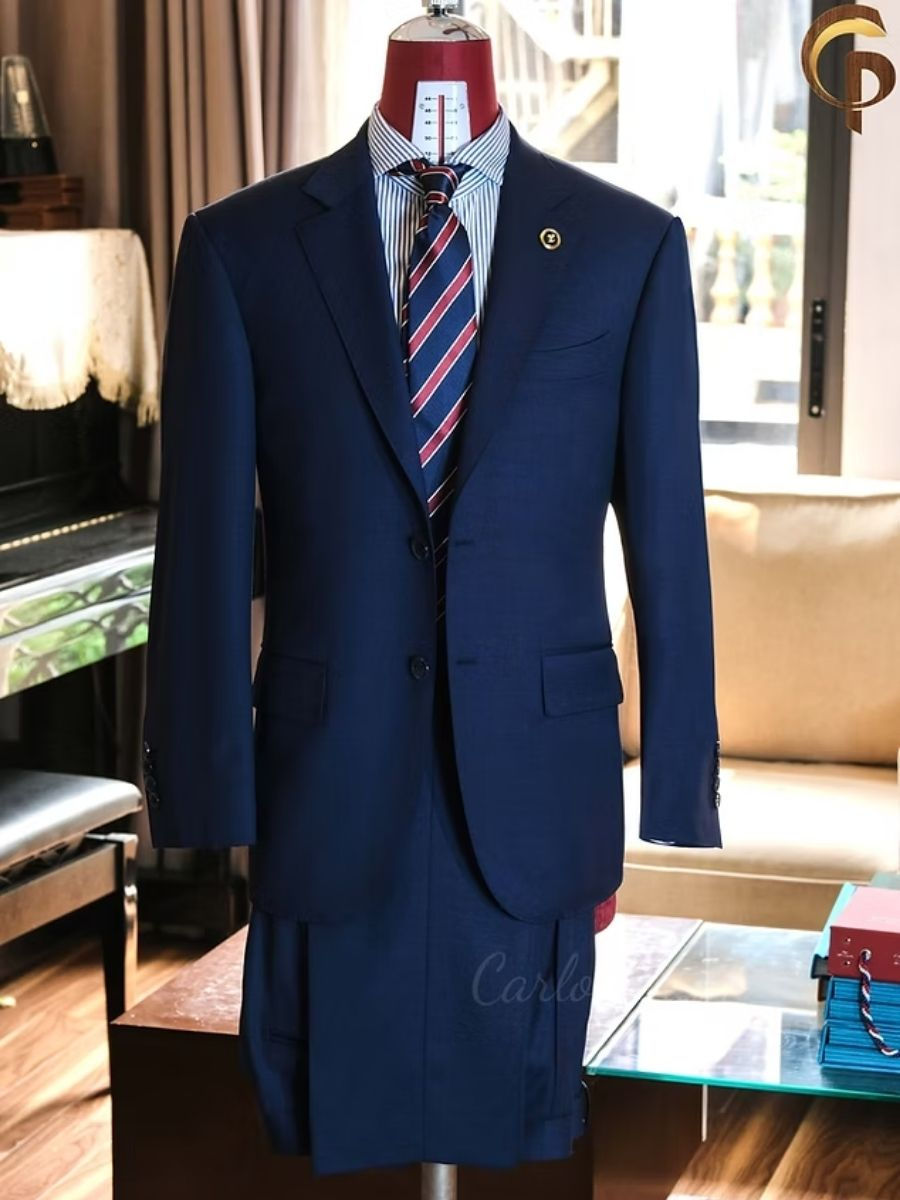
Tropical wool is a plain-weave worsted in the 200 to 250 gsm range. The surface is smoother and more formal than fresco, closer to a standard business suit in appearance, but with roughly a third less weight. Crease recovery is good, and the cloth takes darker formal colors like mid-grey and navy cleanly.
This is the safe choice for grooms who want a suit that also works after the wedding. A mid-blue tropical wool suit moves directly into office and event wear, which matters if the wedding budget needs to cover a suit you will keep using.
Cotton and cotton-linen blends
Cotton suiting sits between linen and wool in behavior. It breathes reasonably well, creases less than linen and has a soft, matte, casual character. A cotton suit in stone or tobacco fits garden weddings and daytime receptions.
Cotton-linen blends are often the practical answer for Vietnam and Southeast Asian destination weddings. The linen content adds airflow, the cotton content controls the wrinkling, and the blend costs less than high-grade pure linen. A 60/40 or 55/45 blend around 230 gsm handles humidity better than either fiber alone.
Summer wedding suit colors and combinations
Color decides how a summer suit reads before anyone notices the fabric. The ranges below cover almost every summer ceremony.
Light neutrals: beige, sand, stone and light grey
Light neutrals are the core summer wedding palette. Beige and sand pair naturally with outdoor light and warm settings such as beaches, gardens and vineyard venues. Stone, a cooler grey-beige, is the most flexible of the group because it works in both warm and cool light. Light grey is the most formal of the neutrals and the easiest to wear for guests, since it never risks competing with the groom.

With light neutrals, keep the shirt simple: white or soft blue, no strong patterns. Brown suede or leather shoes finish the look better than black, which contrasts too hard against pale cloth.
Blues: sky, cornflower and mid-blue
Sky and cornflower blue read clearly as daytime celebration colors and photograph well against greenery and open sky. Mid-blue is the practical pick, formal enough for an indoor ceremony, light enough in tone for outdoor use, and the single most reusable suit color after the wedding.
Style of summer wedding suit
Beyond fabric and color, a set of construction and styling choices decides how a suit performs across a long summer day. None of them change the suit's appearance dramatically. Together, they are the difference between a suit built for the occasion and a business suit worn in the wrong season.
Unstructured shoulders and reduced padding
A standard suit shoulder contains padding and a sleevehead wadding that create a sharp, built-up line. For summer tailoring, we reduce or remove this. A soft shoulder with minimal padding follows your natural shoulder line, weighs less, and lets the jacket move with you instead of sitting on you like a frame.

On linen and cotton especially, a soft shoulder matches the relaxed character of the cloth. Grooms who want a more formal line can keep light padding with a plain sleevehead, which holds structure without the full business-suit build.
Lining choices: unlined, quarter and half
Quarter lining is the default for summer weddings with sleeves stay lined so the jacket slides over a shirt cleanly and the open lower body releases heat. Unlined suits the hottest venues and linen clothes. Half lining, which adds coverage across the full upper back, is worth keeping only when the outer cloth is loosely woven enough to need support, or when the wedding runs into a cool evening.

If you keep any lining, choose cupro or viscose rather than polyester. Polyester lining blocks moisture and is the single most common reason a "lightweight" suit still feels hot.
Trouser for summer
Side adjusters replace the belt, removing a leather layer at the waist and cleaning up the line when the jacket opens or comes off.
A no-break or quarter-break hem keeps the trouser sitting cleanly on the shoe in photos and off the ground on sand or grass.
A single reverse pleat with a medium rise gives room through the thigh for sitting, dancing and kneeling photos, while a flat front stays correct for slimmer cuts. An unlined trouser to the knee, rather than full lining, follows the same heat logic as the jacket.
Shirt and accessory pairing
The shirt under a summer suit should be lightweight cotton poplin or a cotton-linen weave, always long-sleeved, with a short-sleeved shirt under a jacket bunching at the elbow and showing in photos. White and pale blue cover nearly every suit color in this guide.
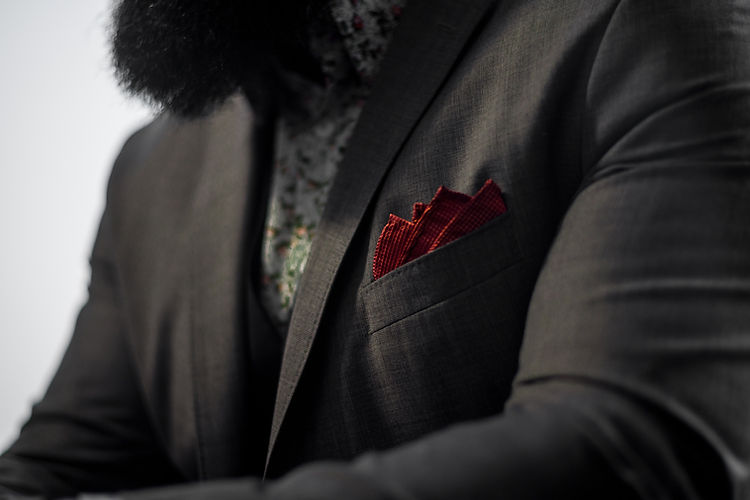
A knitted or linen tie holds the informality of summer clothes better than a silk satin tie, and for beach ceremonies, an open collar with a pocket square is now a fully accepted standard. Brown suede loafers or derbies work across the whole light-neutral and blue palette. Skip heavy watches and metal tie bars under direct sun, and a linen pocket square does more for the photos at no cost in comfort.
How does Carlo Pham tailor your summer wedding suit?
Every summer wedding suit at Carlo Pham is made to measure in Hanoi against your individual pattern. The process runs in four stages, takes 5 to 7 days for clients in Vietnam, and has a remote route for clients ordering from abroad.
Consultation and fabric selection
The first session covers the wedding itself before any measuring starts: venue, ceremony time, climate, dress code and the wedding party's outfits. You then select from physical swatches in our fabric library, including linen, fresco, tropical wool, cotton-linen and silk blends, so you can judge weight and texture by hand rather than from photos.
Measurement and pattern
We take a full set of body measurements along with posture notes, shoulder slope and stance, which affect how a jacket hangs more than the tape numbers alone. From these, a pattern is drafted for your build rather than adjusted from a stock block. For summer cloths this matters more, not less such as lightweight, open-weave fabrics hide fewer fit errors than heavy worsted, so the pattern has to be right before cutting.
Fittings and adjustments
The suit goes through 2 to 3 fittings. The first fitting checks the fundamental balance, includes shoulder position, jacket length, sleeve pitch and trouser rise. The second fitting refines the details, collar sit, sleeve length, waist suppression, and hem. Where a third fitting is needed, it is a final confirmation in the finished suit. Between fittings, adjustments are made in-house, which is what keeps the schedule inside a week.
Care and travel tips for a summer suit
The habits below keep the suit correct through the wedding day and in good condition for years after, which matters for grooms who plan to keep wearing it.
Packing and travel
For a destination wedding, carry the suit rather than checking it whenever possible. Fold the jacket once, inside out with the shoulders nested into each other, so pressure sits on the lining side rather than the outer cloth. Pack the trousers flat along their crease.
Unpack the suit as soon as you arrive and hang it on a shaped wooden hanger, not the wire hotel kind.
Wrinkle recovery by steam
Hang the suit in the bathroom during a hot shower, and the humidity relaxes most creases within fifteen to twenty minutes. Keep a handheld travel steamer working from a few centimeters off the cloth. High-twist fresco usually needs neither, since the yarn springs back on the hanger overnight.
Pure linen re-creases within an hour of wear, and that is the character of the fiber. Steam it before the ceremony for the photos, then let it live.
Cleaning linen and wool after the wedding
Do not dry clean the suit reflexively after every wear. Dry cleaning chemicals strip natural fiber over time, and a suit worn once in a day rarely needs it. Air the suit for a day, brush wool cloths with a garment brush to lift dust, and spot-clean minor marks with a barely damp cloth.
Carlo Pham is a made-to-measure and bespoke tailoring house in Hanoi, Vietnam, specializing in wedding suits, groom outfits and tailored menswear for local and international clients. Every suit is cut against an individual pattern, built in-house with half canvas construction as the standard, and fitted over 2 to 3 sessions. The fabric library covers linen, fresco, high-twist and tropical wool, cotton-linen and silk blends from European and Asian mills, selected for Vietnam's climate and destination weddings across Southeast Asia.
________________________________
Carlo Pham - Modern Voice of Tailoring - High-end tailoring
Hotline: 0931859799
Instagram: https://www.instagram.com/carlopham/
Website: www.Carlopham.com
Address: No. 9 Hang Manh, Hoan Kiem, Hanoi
For rental division/Vest rental service-Suit rental-Tuxedo rental: www.clevergent.vn



Thank you for the great read. I really appreciate the practical advice on fit for hot climates and the clear distinction between linen, fresco, and tropical wool. The insight on side adjusters and trouser hems is a great detail that most people overlook.